
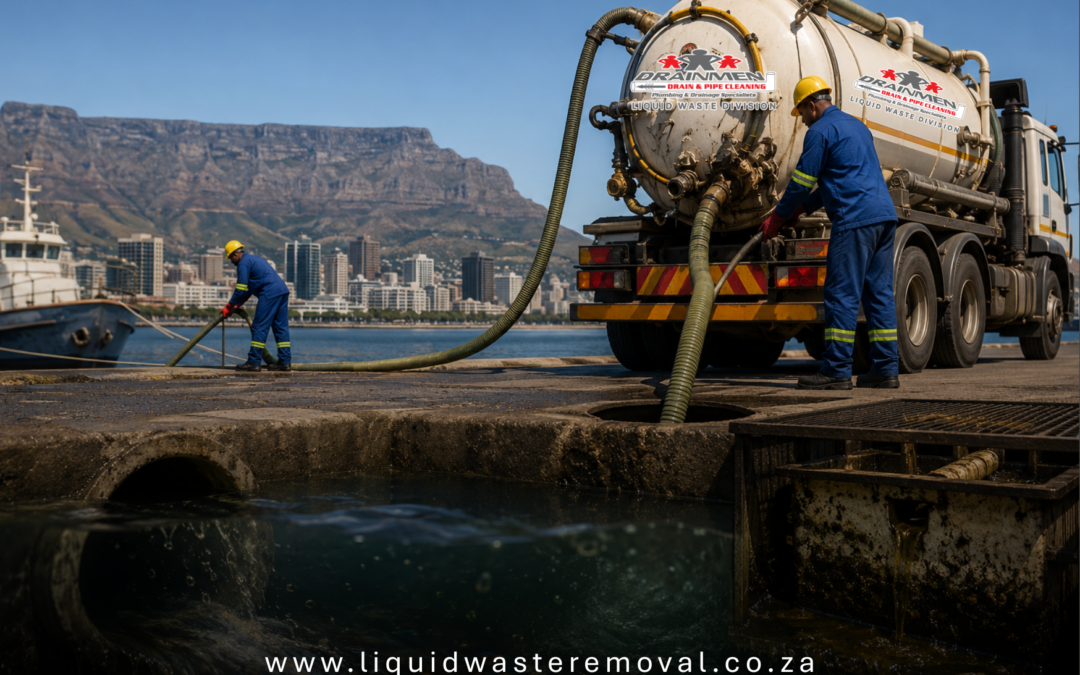
From restaurants and factories to marinas and construction sites, liquid waste is part of daily operations across South Africa. But what many businesses don’t realise is that improper disposal can lead to blocked infrastructure, environmental contamination, legal penalties, and serious health risks.
As environmental regulations tighten and municipalities enforce stricter waste by-laws, professional liquid waste removal is no longer just a convenience — it’s a necessity.
What Is Liquid Waste?
Liquid waste includes any waste material in liquid form that requires safe collection, transport, treatment, or disposal. Common examples include:
- Grease trap waste
- Septic tank waste
- Industrial effluent
- Oily water and sludge
- Contaminated stormwater
- Portable toilet waste
- Marine and vessel waste
Many of these waste streams contain harmful chemicals, bacteria, oils, or pollutants that cannot simply be discharged into municipal drains or the environment.
The Environmental Impact of Improper Disposal
When liquid waste is dumped illegally or handled incorrectly, the consequences can be severe:
- Groundwater contamination
- Damage to rivers, oceans, and ecosystems
- Sewer blockages and infrastructure damage
- Strong odours and public health concerns
- Fines and legal action against businesses
South African waste legislation follows the “cradle to grave” principle, meaning the waste generator remains responsible for the waste until it has been safely disposed of at an approved facility.
That means businesses can still face liability if they hire an unlicensed or non-compliant waste transporter.
Why Businesses Should Use Licensed Waste Removal Specialists
Professional liquid waste removal companies are trained and equipped to safely collect, transport, and dispose of waste according to municipal and national regulations.
Licensed operators typically provide:
- Vacuum tanker collection services
- Safe transportation of waste
- Disposal at approved treatment facilities
- Waste tracking documentation
- Compliance certificates
- Emergency spill response services
Cape Town businesses, in particular, face strict by-law requirements regarding grease traps, industrial waste, and contaminated water disposal.
Using a compliant waste management provider helps protect your business from environmental risk, operational downtime, and costly penalties.
Industries That Rely on Liquid Waste Removal
Liquid waste management is essential across many industries, including:
Hospitality & Restaurants
Grease traps and kitchen waste need regular servicing to prevent blockages, foul odours, and sewer overflows.
Industrial & Manufacturing
Factories often generate wastewater, sludge, oils, and chemical waste that require specialist handling.
Marine & Waterfront Facilities
Boats, marinas, and harbours generate wastewater and oily bilge waste that must be disposed of responsibly to protect marine ecosystems.
Construction & Infrastructure
Construction sites frequently require dewatering, portable sanitation servicing, and contaminated water removal.
Commercial & Residential Properties
Septic tanks, conservancy tanks, and drain systems require ongoing maintenance to avoid expensive failures.
Sustainability Is Changing the Industry
Modern waste management is shifting away from landfill disposal and toward recycling, recovery, and sustainable treatment methods.
Many South African waste management companies are adopting “Zero Waste to Landfill” initiatives by diverting waste toward:
- Composting processes
- Waste-to-energy facilities
- Water treatment plants
- Recycling and recovery systems
This helps reduce environmental impact while supporting a more sustainable circular economy.
Choosing the Right Liquid Waste Removal Company
When selecting a service provider, businesses should look for:
- Proper licensing and accreditation
- Compliance with environmental regulations
- Experienced operators and specialised equipment
- Safe disposal procedures
- Fast response times
- Transparent reporting and documentation
A reliable liquid waste removal partner doesn’t just remove waste — they help protect your business, employees, customers, and the environment.
Final Thoughts
Liquid waste management plays a critical role in keeping South Africa’s businesses, waterways, and infrastructure safe. Whether it’s grease trap waste from a restaurant, industrial sludge from a factory, or marine waste from a vessel, responsible disposal matters.
Partnering with a professional liquid waste removal company ensures your waste is handled legally, safely, and sustainably — giving you peace of mind while helping build a cleaner future for everyone.
For trusted, compliant, and environmentally responsible liquid waste solutions, visit Liquid Waste Removal.
Recent Comments